 thegreencall
By The Green Call News Desk | Source: Reuters, Local Media Reports
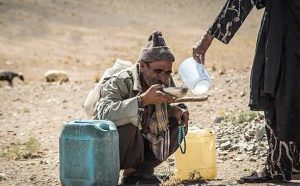
Iran is facing one of the worst water crises in its history, and officials have warned that if the current drought continues, the capital city, Tehran — home to over 10 million people — could soon become uninhabitable.
President Masoud Pezeshkian said that if there is no rainfall by December, the government will have to begin water rationing in the capital.
“Even if we ration the water and still have no rain, we will simply run out,” Pezeshkian warned on November 6. “People will have to leave Tehran.”
Growing Crisis and Political Pressure
The situation poses a serious challenge for Iran’s ruling establishment. In 2021, water shortages sparked violent protests in the southern province of Khuzestan, and in 2018, farmers accused the government of mismanaging water resources.
Officials have already reduced water pressure across several districts. Experts say the crisis is not only due to low rainfall but also the result of years of mismanagement — including excessive dam construction, illegal well drilling, and inefficient agricultural practices that have depleted groundwater reserves.
President Pezeshkian blamed previous administrations, climate change, and water misuse for the worsening crisis.
Public Anxiety and Economic Burden
Although there are no major protests at present, Iranians are already suffering under economic hardship due to international sanctions and inflation. The shortage of water has further strained families and communities, raising fears of renewed unrest.
In Tehran, many residents are facing abrupt water cuts. One resident, Mahnaz, told Reuters:
“Last week, the water suddenly went off at 10 p.m. and didn’t return until 6 a.m. My two children and I had to manage with bottled water just to brush our teeth and wash our hands.”
Reservoirs at Half Capacity
Iran’s National Water and Wastewater Company denied that formal rationing has started but confirmed that water pressure is being lowered at night and that complete shutoffs may occur in some districts.
According to Behzad Parsa, a senior official in Tehran’s water sector, the city’s reservoirs — which once stored 500 million cubic meters of water — now hold only 250 million, a 50% reduction.
At the current rate of consumption, he warned, the reserves could be exhausted within two weeks.
Nationwide, 19 major dams — about 10% of Iran’s total — are effectively dry. In Mashhad, Iran’s second-largest city, reservoirs serving its 4 million residents are now at less than 3% capacity.
Climate Change and Mismanagement
The water crisis follows record-breaking summer heat and rolling blackouts. In July and August, the government declared emergency public holidays to conserve water and energy, closing offices and banks as temperatures exceeded 50°C (122°F) in some areas.
Officials say climate change has made the problem worse, accelerating evaporation and groundwater depletion.
Several Iranian newspapers have criticized the government’s environmental policies, blaming unqualified appointments and political interference in resource management. The administration, however, has denied responsibility.
Calls for Divine Help and Temporary Measures
In a symbolic move, Mehdi Chamran, head of Tehran’s city council, suggested a return to traditional rain prayers, saying:
“In the past, people would go to the desert to pray for rain. Perhaps we should not ignore that tradition.”
Authorities have introduced short-term measures such as reducing water pressure, transferring water from nearby reservoirs, and urging citizens to install storage tanks and pumps to conserve supplies.
However, environmental experts argue that these steps are too little, too late.
An academic from Isfahan University, speaking anonymously, told The Green Call:
“They keep making promises, but we see no real action. These are stopgap measures — not long-term solutions.”
The Bigger Picture
Iran’s water crisis reflects a combination of natural and human-made factors — climate change, policy failures, and political rigidity. If the drought continues through the end of the year, Tehran could face a mass exodus, and the country’s fragile infrastructure may struggle to sustain life in its most densely populated regions.
Reporting by: The Green Call Environmental Desk
Sources: Reuters, Iran National Water & Wastewater Company, Local Iranian Media
About The Author