Pakistan Needs $7–14 Billion Annually for Climate Adaptation by 2030, Says PM’s Adviser
 thegreencall
ROME: Prime Minister’s Adviser Dr. Syed Tauqir Shah has said that Pakistan is the fifth most climate-affected country in the world, and that climate change poses a dual threat to Pakistan’s national food security. He stated that by 2030, the country will need $7 to $14 billion annually for adaptation. Our need is immediate and clear, he emphasized, requiring a combination of water storage, nature-based solutions, restoration of floodplains, advancement of the irrigation sector, and implementation of watershed management.
He made these remarks while addressing the “Rome Water Dialogue” organized under the aegis of the International Climate Finance Institution. According to further details of his speech, hundreds of heads of state, ministers, civil society representatives, and development agencies from around the world participated in this dialogue.
Tauqir Shah said that Pakistan is facing both climate and water crises, with the dual threats of extreme weather events and chronic resource pressures putting the nation’s food security at risk.
He highlighted that Pakistan faces two major situations:
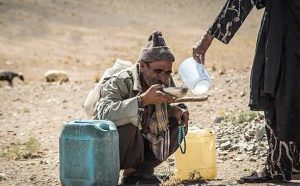
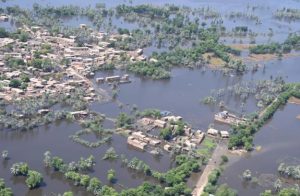
- Catastrophic flooding, as seen in 2022, when more than 33 million people were affected across the country, 4 million acres of agricultural land were destroyed, and 10 million people lost access to clean drinking water. He added that the devastation caused by the recent 2025 floods has been equally destructive.
- Severe water scarcity, noting that Pakistan’s water storage capacity is limited to just 30 days of supply.
He stressed that as a clear and urgent need, Pakistan requires large-scale investment in water infrastructure—a mix of traditional and larger storage solutions combined with nature-based solutions, floodplain restoration, resilient irrigation techniques, and watershed management.
Criticizing international climate finance institutions, Tauqir Shah said that Pakistan requires $7 to $14 billion annually by 2030 solely for adaptation, yet it faces a global financial structure that turns needed investments into contradictions.
He explained that the failures of existing global climate funds directly affect Pakistan’s ability to invest in water resilience and innovation. Despite national needs, Pakistan has remained deprived of available global climate funds because international standards are often highly specific, technically complex, and subject to competing demands, underscoring the need for greater institutional capacity.
He further stated that even the approved funds are subject to slow disbursement and lengthy multi-year legal processes. Moreover, most available climate finance comes in the form of loans and concessional loans, with only a small portion available as grants.
About The Author