 thegreencall
(Summary: The Guardian) By Maya Goodfellow
Former Canadian Environment and Climate Change Minister Catherine McKenna reflects on her political journey, the sexism she faced, and the contradictions of climate policy in her memoir, “Run Like a Girl.”
A Dire Climate Analogy
McKenna recalls a colleague’s analogy: if a truck were heading toward your children, you would do everything possible to stop it. She uses this to argue that the world must employ “all the tools at our disposal” to confront the climate crisis.
Sexism and Threats
During her time in office, she was repeatedly mocked as “climate Barbie,” faced online abuse, and even death threats. In one incident, a man harassed her and her children in public while filming them—illustrating the toxic challenges women politicians endure.
Trudeau’s Climate Contradictions
McKenna describes Prime Minister Justin Trudeau as “aloof” and more focused on image than substance, though supportive on climate. She spearheaded Canada’s carbon tax, designed as a “price on pollution” that ultimately benefited low and middle-income households.
Yet at the same time, Trudeau’s government approved the Trans Mountain pipeline expansion, a move that undermined Canada’s climate credibility. McKenna admits this was one of her regrets, believing the oil and gas industry had “taken them for fools.”
Achievements and Regrets
She remains proud of Canada’s role in the 2015 Paris Agreement (COP21), the first global legally binding climate treaty. Still, she acknowledges that governments—including her own—failed to go far enough.
Looking Ahead
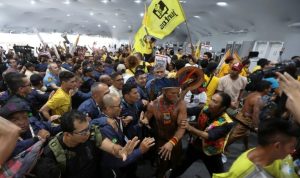
McKenna insists real progress requires targeting big emitters, financial institutions, and corporations rather than focusing only on individual change. Renewable energy, she says, is already cheaper and more efficient, but regulatory and political barriers persist. Public pressure and protest, she emphasizes, remain crucial in forcing governments to act.
Analysis
McKenna’s story highlights a central truth: climate politics is not just about science or policy, but about power, economics, sexism, and global contradictions. Even in a developed country like Canada, governments can declare a climate emergency one day and expand oil pipelines the next. This paradox reflects the deeper struggle the world faces in confronting climate change.
📌 This summary is based on reporting from The Guardian.
About The Author